 how-to
Wilted Flowers on Arrival: What to Do First
Last Updated: November 1, 2026
Quick Summary
Unwrap your wilted flowers, recut every stem 2-3cm at a 45-degree angle, strip leaves below the waterline, and place them in cool water with flower food. Most wilted flowers recover within 24 hours if you act within the first few hours of arrival.
- Recut stems at a 45-degree angle with sharp shears, never blunt scissors that crush the stem.
- Rest the bouquet out of direct sunlight for 4-6 hours after conditioning.
- Change the water every two days and recut the stems each time.
- Contact the florist the same day with unedited daylight photos of the damage.
- If there's no improvement after 24 hours, ask for a replacement or refund.
Table of Contents
- Why Flowers Wilt After Delivery
- How to Revive Wilted Flowers in 6 Steps
- How to Care for a Bouquet After Delivery
- How to Contact a Florist About Damaged Flowers
- When to Expect Recovery, and When to Ask for a Replacement
- Ordering Flowers That Arrive Fresh
- Frequently Asked Questions
Why Flowers Wilt After Delivery
A wilted bouquet on arrival is usually a hydration problem, not a sign the flowers are dead. Cut flowers lose water faster than they can take it up, and the trip from the cooler to your front door is the hardest part of their life.
Here's the core problem. Once a stem is cut, the flower has no root system. It drinks only through the cut end, and that end starts to seal over within hours.
Temporary Dehydration vs Transit Damage
Not every droop means the same thing. Temporary dehydration is soft stems and slightly limp petals that perk up after a fresh cut and clean water. Transit damage looks different: brown or mushy petal edges, snapped stems, crushed flower heads, or a sour smell.
Cold damage shows as darkened, translucent petals. Heat damage shows as dry, papery edges and dropped buds. If you can rule those out, you're dealing with dehydration, and that's fixable.
How to Revive Wilted Flowers in 6 Steps
Learning how to revive wilted flowers comes down to one goal: get water moving up the stem again. Do these six steps within the first few hours of arrival.
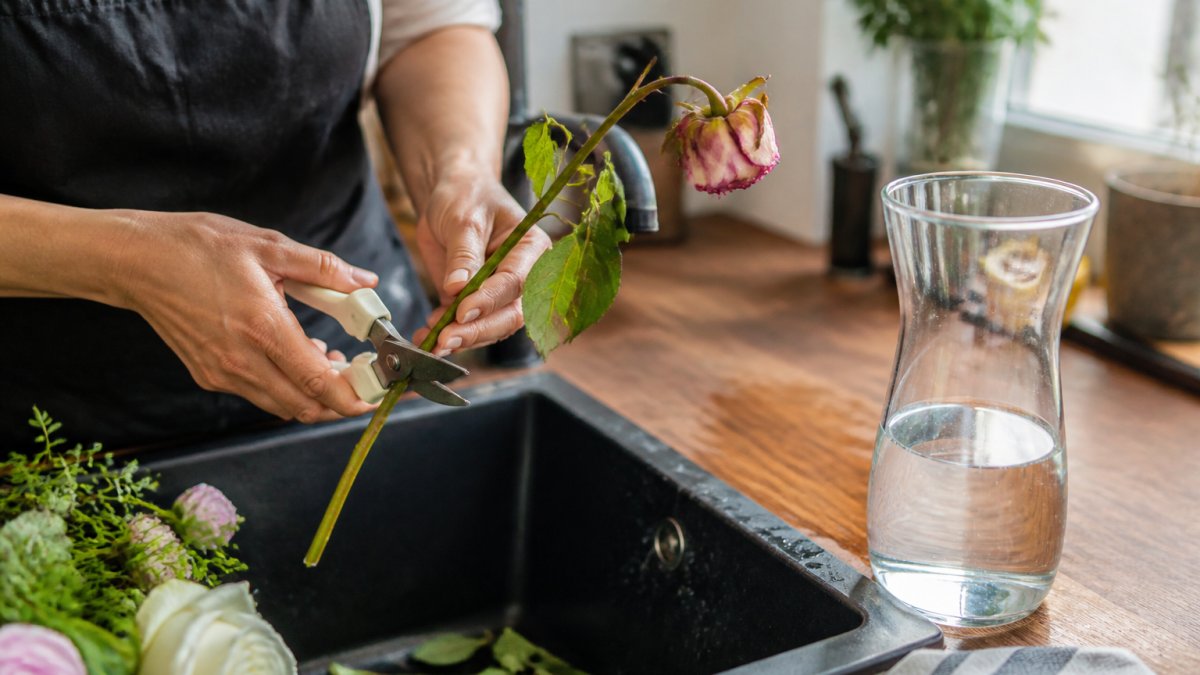
- Unwrap and inspect. Remove all packaging and check each stem for damage.
- Mix fresh water. Use cool water in a clean vase, never warm.
- Recut every stem. Take 2-3cm off at a 45-degree angle with sharp shears or a sharp knife.
- Strip lower leaves. Remove any leaf that would sit below the waterline.
- Add flower food. Use flower food if one came with your delivery, or a commercial flower food from your local supermarket or florist.
- Rest them somewhere cool. Keep the bouquet out of direct sunlight for 4-6 hours.
The 45-degree angle matters more than people think.
Watch out: cutting with blunt scissors crushes the stem instead of slicing it, and a crushed stem seals over faster than a clean cut.
Flower-by-Flower Revival Notes
Roses usually respond well to a fresh cut and deep cool water. Tulips are thirsty and often recover within hours, but they keep growing in the vase, so trim again after a day. Soft-stemmed flowers like ranunculus and anemones are the quickest to droop and the quickest to bounce back.
Work through these six steps within the first few hours of arrival to get water moving up the stem again.
| Step | What to do | Time or frequency |
|---|---|---|
| 1 | Unwrap and inspect each stem for damage | First few hours after arrival |
| 2 | Mix cool water in a clean vase, never warm | First few hours after arrival |
| 3 | Recut every stem at a 45-degree angle | Take 2-3cm off |
| 4 | Strip any leaf that would sit below the waterline | Before placing in vase |
| 5 | Add flower food from delivery or shop-bought | Before placing in vase |
| 6 | Rest bouquet out of direct sunlight | 4-6 hours |
How to Care for a Bouquet After Delivery
Good aftercare is what stops wilted flowers coming back. Change the water every two days, recut the stems each time, and keep the vase away from heat, draughts and direct sunlight.
A common mistake is topping up the vase instead of replacing the water. Old water fills with bacteria that clog the stem ends.
If you want a bouquet that already comes arranged in a vase, ready to place, you can shop our Midsummer bouquet in a vase or the rose and lily bouquet in a vase.
How to Contact a Florist About Damaged Flowers
Reach out the same day the flowers arrive, before you throw anything away. The earlier you make contact, the easier it is for the florist to trace what happened between the cooler and your doorstep. Most florists will ask for a photo of the whole bouquet plus a close-up of the damaged stems or petals. That's not bureaucracy; it's how we tell a delivery problem from a care problem.
Document the damage properly
Before you move anything, take these photos in daylight:
- The full bouquet as it arrived, still in its packaging
- A close-up of the worst-affected flower heads
- A close-up of the stem ends, showing whether they were cut cleanly
Keep the packaging, the flower food sachet and your order confirmation until the issue is resolved. Don't edit or filter the photos; unedited images are what a florist needs to assess transit damage versus dehydration. If the bouquet was left in direct sun or in a letterbox, note that in your message, because it changes what the florist can reasonably do.
What to put in your message
Send one clear message rather than a stream of follow-ups. Include:
- Your order number and delivery date
- The delivery address and the time the flowers were left
- Photos taken in daylight, unedited
Email or phone the florist rather than messaging on social media, so it lands with the team who can act on it. Keep the flowers in the vase while you wait for a reply; don't discard them, because the florist may need to see them.
What to expect from the florist
A good florist will respond promptly and will usually offer a replacement or a refund once they've seen the photos. Ask which remedy they're proposing and when it will happen.
If the flowers were damaged because they were left in full sun at your request, or because a neighbour signed for them and left them out, be upfront about that.
When to Expect Recovery, and When to Ask for a Replacement
Most dehydrated bouquets show improvement within 4-6 hours and near-full recovery within 24 hours. Give it a full day before you judge. Signs of success: stems standing upright, petals firm to the touch, and fresh colour returning to the flower heads. Check at the 4-hour mark, again at 12 hours, and once more at 24 hours.
A symptom-based check
Use this to decide whether to keep going or contact the florist:
- Stems firming up and heads lifting: recovery is underway; keep the water fresh and leave them cool.
- Stems still soft but petals look normal: likely still dehydrated; recut again and change the water.
- Petals brown, mushy or translucent after 24 hours: likely cold or transit damage; rehydration won't fix it.
When to stop trying
If there's no improvement after 24 hours, and the petals are discoloured, the stems are mushy, or the smell is off, stop.
Ask for a replacement or refund if:
- Petals are brown, mushy or translucent after 24 hours
- Stems are snapped or crushed on arrival
- The bouquet smells sour
A good florist will replace or refund in those cases. Our service is backed by a 100% customer satisfaction guarantee. If you're claiming under the Australian Consumer Law, the remedy should be a replacement or refund, not a credit note you didn't ask for.
Preventing repeat wilting after recovery
Once the bouquet has perked up, keep it that way: change the water every two days, recut the stems each time, strip any leaves below the waterline, and keep the vase away from heat, draughts and direct sunlight. A daily check of stem firmness and water clarity will tell you within seconds whether the bouquet is still happy.
Ordering Flowers That Arrive Fresh
The best defence against wilted flowers is ordering from a florist who controls the whole chain. Same-day delivery shortens the time between the cooler and the doorstep, and that single factor does more for freshness than any revival trick.
If you're reordering, you can arrange same-day flower delivery through our website. Orders placed before 2pm go out the same day, with delivery by 5pm to businesses and 7pm to homes.
A few habits that protect your order:
- Order before the cut-off so flowers aren't held overnight
- Give a delivery address where someone can receive them
- Ask for the flowers to be left in shade, not full sun
Frequently Asked Questions
How long should I wait to see if wilted flowers recover?
Give them 12 to 24 hours after recutting the stems and standing them in fresh water. Most mildly dehydrated bouquets perk up within a few hours, but roses and tulips can take overnight. Check for progress by looking at the stems and petals: firm stems and petals lifting away from the centre are good signs. If the flower heads are still limp and the stems feel soft after a full day, the damage is likely transit-related rather than dehydration, and it is worth contacting the florist.
Should I trim flower stems before putting them in water?
Yes, always. A sharp knife or clean shears and a 45-degree cut give each stem a fresh surface to take up water, because the original cut seals over during transit. Cut about 2 to 3 centimetres off the bottom, at an angle so the stem rests on the vase floor without blocking water uptake. Remove any leaves that would sit below the waterline, then place the stems straight into a clean vase of cool water. Never crush or snap the ends, as this damages the water channels inside the stem.
What should I do if flowers arrive damaged or wilted?
Photograph the bouquet as it arrived, including a close-up of any damaged flower heads and the packaging, then follow the revival steps: recut the stems, strip submerged leaves and refill a clean vase with fresh water. Contact the florist the same day with your order number and the photos. Most wilted flowers bounce back within 24 hours, but if the damage is clearly transit-related, a replacement or refund is a fair request. Keep the original flowers until the florist responds.
What information should I include when contacting a florist about wilted flowers?
Include your order number, the delivery date and time, the recipient's suburb, and clear photos of the bouquet on arrival. Describe which flower types are affected and whether the stems are soft or the petals are browning, as this helps the florist tell dehydration from transit damage. Mention what you have already tried, such as recutting stems or changing the water. If you ordered for someone else, note whether the recipient or the sender should be contacted about the resolution.
Flowers that arrive tired aren't a lost cause, but they do need you to act fast. If you've followed the steps above and the bouquet still hasn't lifted after a full day, that's our cue to make it right. Sarah's Flowers offers same-day delivery across Australia, a flat delivery fee of $22.95, and a satisfaction guarantee on every order. Get started with Sarah's Flowers and send a bouquet that arrives fresh, conditioned and ready to display.
